
Book 1: Introduction to AsciiDoc
AsciiDoc is a lightweight markup language used for writing structured documents. It is often used for technical documentation, books, articles, and presentations. Unlike Markdown, AsciiDoc has more advanced formatting options, making it a powerful choice for documentation. For many years, the default standard for formal scientific documentation was LaTeX. Which is complex, requires many tools, and is riddled with rendering issues. Asciidoctor is a tool for converting AsciiDoc to HTML, PDF, and other formats. And together, the language and the simple tool helped AsciiDoc become the new standard.
Why Use AsciiDoc?
-
Readable and simple: Use plain text with intuitive syntax.
-
Highly structured: Supports complex documents, (books, manuals, reports).
-
Flexible output formats Can be converted to HTML, PDF, DocBook, and more.
-
Powerful features Include tables, code blocks, images, cross-references, and variables.
-
Used in professional documentation: Companies like Red Hat and GitHub use it for documentation.
Differences Between AsciiDoc, Markdown, and LaTeX
| Feature | AsciiDoc | Markdown | LaTeX |
|---|---|---|---|
Syntax Simplicity |
Easy |
Very Easy |
Complex |
Output Formats |
HTML, PDF, DocBook |
HTML, PDF |
PDF, PostScript |
Tables Support |
Yes |
Limited |
Yes |
Variables & Attributes |
Yes |
No |
Yes |
Ideal for |
Technical Docs, Books |
Blog Posts, Notes |
Academic Papers |
AsciiDoc is more powerful than Markdown for documentation but simpler than LaTeX. It supports tables, variables, and multiple output formats, making it a great choice for structured documents.
Installing AsciiDoc Tools
Before writing AsciiDoc documents, you need tools to preview and convert them. Choose one of the following:
Install Asciidoctor (Recommended)
Open a terminal or command prompt. Run:
gem install asciidoctorVerify installation:
asciidoctor --versionUse an Online AsciiDoc Editor
Websites like https://asciidoclive.com/ allow you to write and preview AsciiDoc without installing anything.
AsciiDoc Plugins for Editors
-
VS Code: Install the AsciiDoc extension.
-
Atom: Use the asciidoc-preview package.
Writing Your First AsciiDoc File
Create a new file named example.adoc.
Add the following content:
= My First AsciiDoc Document
:author: Your Name
:revdate: 2025-02-21

This is my first AsciiDoc document.

== Introduction

AsciiDoc allows you to write structured documents easily.

== Features

- Simple markup
- Converts to multiple formats
- Supports advanced formatting
Save the file and convert it to HTML using:
asciidoctor example.adocOpen example.html in a web browser to see the formatted document.
Book 2: Basic Formatting
Paragraphs and Line Breaks
-
To create a new paragraph, simply start typing on a new line.
-
To force a line break within a paragraph, use a
+at the end of the line.
Example:
This is a line with a forced break. +
This text appears on a new line.
Headings
-
Use
=for the document title,==for sections, and more===for subsections.
Example:
= Main Title
== Section 1
=== Subsection 1.1
Bold, Italic, and Underline
-
Bold:
bold→ bold -
Italic:
italic→ italic -
Underline:
underlined→ underlined
Monospace and Inline Code
-
Use backticks for inline code:
Inline code example -
Use
` to mark text as monospace: `+monospace text
Lists
Unordered List
-
First item
-
Second item
-
Sub-item
-
Ordered List
-
First item
-
Second item
-
Sub-item
-
Description List
- AsciiDoc
-
A markup language.
- Markdown
-
A simpler markup language.
Book 3: Structuring a Document
Document Title and Metadata
Example:
= Document Title
Author Name
2025-02-21
:doctype: article (could be used for books and other things)
:toc: preamble (table of contents)
Sections and Subsections
Example:
== Introduction
=== Subsection 1
==== Sub-subsection
Including External Files
Syntax:
// include::file.adoc[]
// This is commented so that the file doesnt create issues
Comments in AsciiDoc
Syntax:
// This is a commentBook 4: Advanced Formatting
Block Quotes
Syntax:
[quote, Author Name, Book Title]
____
This is a block quote.
____
Sidebars and Admonitions
Sidebars
[sidebar]
****
This is a sidebar.
****
Admonitions
NOTE: This is an important note.
TIP: This is a useful tip.
WARNING: Be careful with this!
Source Code Blocks
Example:
def hello():
    print("Hello, AsciiDoc!")
// this is commented out to not break anything
 ----
Tables
Basic Table
|===
| Column 1 | Column 2 | Column 3
| Row 1A   | Row 1B   | Row 1C
| Row 2A   | Row 2B   | Row 2C
|===
CSV-Style Table
[format="csv"]
|===
Column 1,Column 2,Column 3
Row 1A,Row 1B,Row 1C
Row 2A,Row 2B,Row 2C
|===
Book 5: Images, Links, and References
Adding Images
Syntax:
// image::image.jpg[Alt Text, width=500]Internal and External Links
External Link
https://www.example.com[Visit Example]Internal Link to Another Section
// <<introduction, Go to Introduction>> this is commented out to not cause any issuesCross-References in a Document
Creating a Reference Target
[[section-id]]== My Section TitleLinking to the Section
// <<section-id, Read more here>> this is commented out to not cause any issuesBook 6: A Demo Document — How a Volcano Once Blocked Out the Sun (1816: The Year Without a Summer)
Introduction of calamity
The year 1816 is often remembered as The Year Without a Summer, a time of extreme weather anomalies that led to global crop failures, food shortages, and social unrest. The root cause?
The massive eruption of *Mount Tambora [1]*in April 1815, one of the most powerful volcanic eruptions in recorded history. This catastrophic event sent enormous amounts of volcanic ash and sulfur dioxide into the atmosphere, dramatically altering the Earth’s climate for over a year.
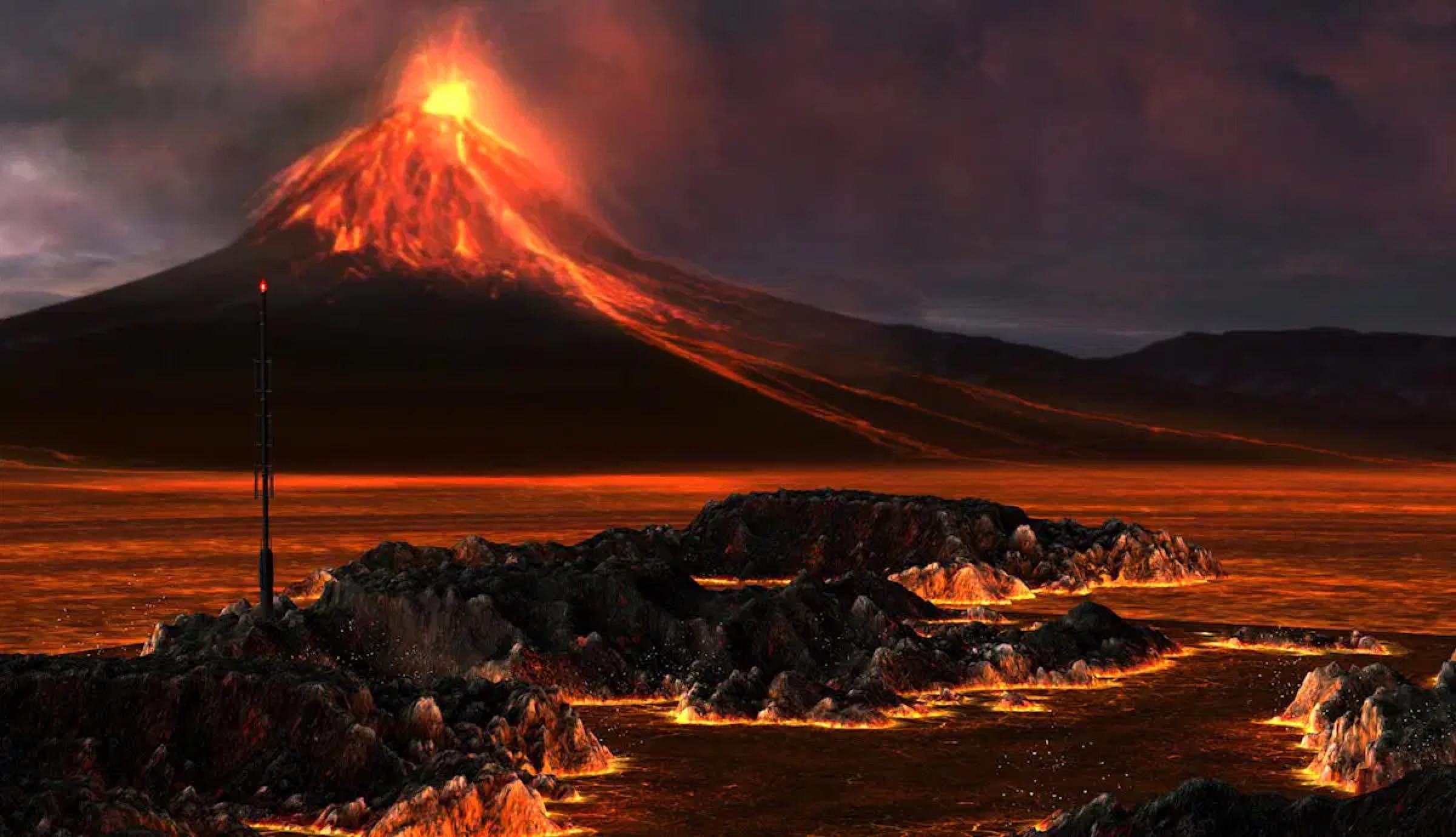
The Eruption of Mount Tambora (April 1815)
Mount Tambora[1], located in present-day Indonesia, erupted with an estimated Volcanic Explosivity Index (VEI)[2] of 7, making it the largest eruption in at least 1,300 years. The explosion ejected about 100 cubic kilometers of volcanic material into the atmosphere, killing tens of thousands in the immediate aftermath. However, the most significant and far-reaching consequences were atmospheric:
— A vast cloud of ash and sulfur dioxide spread across the globe, blocking sunlight.+
— Global temperatures dropped by an estimated 0.4–0.7°C (0.7–1.3°F) over the next year.+
— Acid rain and ashfall disrupted agriculture and ecosystems.
| The Tambora eruption was 100 times more powerful than Mount St. Helen’s in 1980. |
1816: A year without a summer
As a result of Tambora’s eruption, the Northern Hemisphere experienced a dramatic climate shift in 1816, leading to unseasonably cold temperatures, failed harvests, and widespread famine. Some of the most significant effects were:
— Frost in Summer: Snow fell in June in parts of New England and Canada, and frosts occurred as far south as Virginia.
— Crop Failures: Europe and North America saw wheat, corn, and other crops fail, causing food shortages and skyrocketing prices.
— Famine and Disease: With food scarcity came malnutrition, and diseases like typhus and cholera spread rapidly.
— Mass Migration: Many Americans, unable to farm, moved westward in search of better conditions, speeding up U.S. expansion.
Cultural and Scientific Advancements
The Year Without a Summer also had unexpected cultural effects:
— Mary Shelley’s Frankenstein[3]* – In 1816, a group of writers, including Mary Shelley, were trapped indoors due to the gloomy weather while vacationing in Switzerland. This eerie atmosphere inspired the creation of Frankenstein, a story that would become one of the most famous Gothic novels of all time.
A warning from history
The 1816 climate crisis is a reminder of how volcanic activity can significantly impact global weather patterns. While modern science allows us to predict and mitigate some effects, a similar eruption today would still pose severe risks to global food supply and economies.
Timeline of Events
| Year | Event |
|---|---|
1815 |
Mount Tambora erupts, sending ash into the atmosphere. |
1816 |
The Year Without a Summer – global temperatures drop. |
1816 |
Snow falls in New England in June. |
1816 |
Widespread famine leads to mass migration in Europe and America. |
1816 |
Mary Shelley begins writing Frankenstein. |
1817 |
Karl Drais invents the Laufmaschine due to horse shortages. |
Conclusion
The Year Without a Summer was a direct result of the Mount Tambora eruption, demonstrating how a single geological event can reshape human history. From global famine to literary inspiration, its effects were profound and far-reaching. Understanding these historical climate anomalies can help us prepare for future environmental disruptions.